
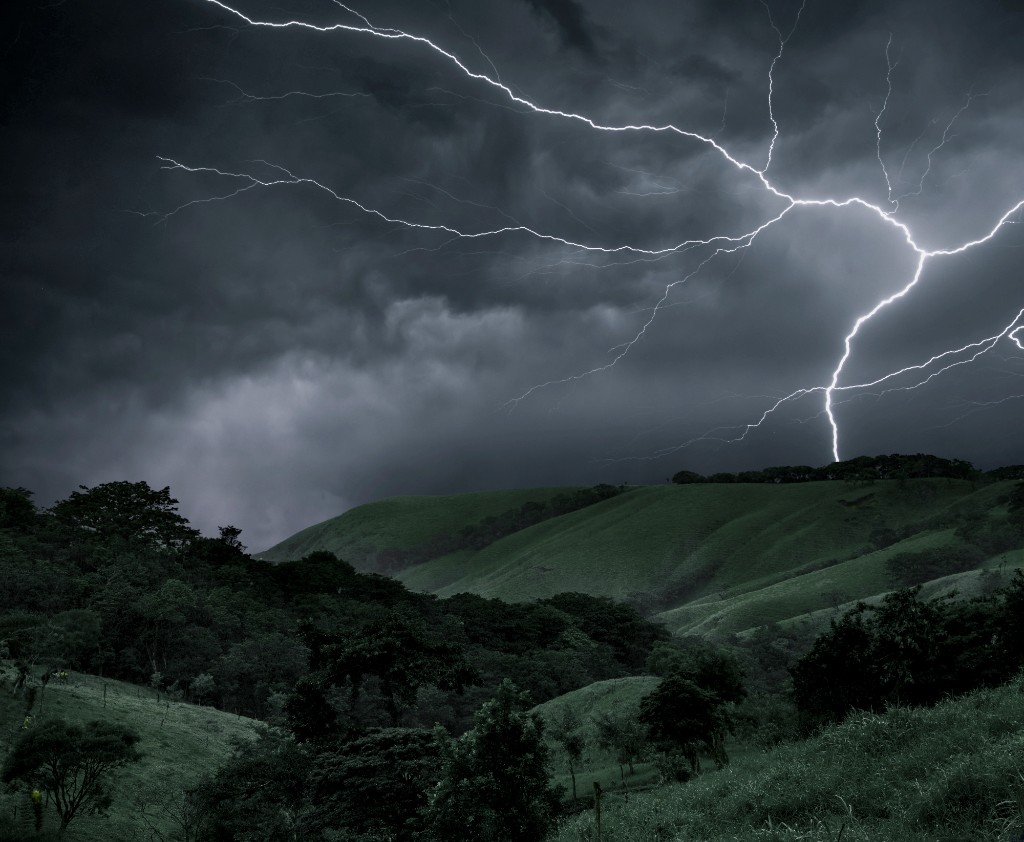
Ecofiniti — Climate Risk Consultant for Risks You Can Actually Plan Around
Climate change isn't only something to defend against and mitigate. For a lot of businesses, understanding it properly opens up genuine opportunity, new markets, product lines that outperform once the market shifts, or an early move competitors haven't made yet. It also, of course, carries risk: physical risk to your sites and operations, transition risks to your business model as policies, pricing and customer expectations shift underneath it. Ecofiniti works as a climate risk consultant helping businesses map both sides properly, building a single register that captures risk and opportunity together, rather than treating one as an afterthought to the other.
We work with businesses at different stages of this process. For some, it's building their first climate risk register from the ground up, beginning with a climate scenario analysis. For others, it's picking up prior work that only ever considered physical risk and never addressed the transitional side, or that only focused on risk and overlooked opportunities. Once the risks and opportunities are properly mapped, controlled, registered and ready for disclosure, we also step in as your TCFD and ISSB reporting consultant, guiding the reporting process from start to finish.
Across all of it, our approach as your climate risk consultant is straightforward: we're hands-on and make the process simple and clear. We're not interested in producing something polished that ends up forgotten sitting in a folder: what goes into your risk register needs to be something your business can genuinely understand and act on as needed.
On this page
- 01Translating climate science into business decisions
- 02Building your climate risk register
- 03Assessing physical and transition risks
- 04Business continuity and climate resilience
- 05Climate-Related Opportunities: The Silver Lining that is often overlooked
- 06Climate-Risk reporting: the logic behind TCFD
- 07IFRS S1 and S2 reporting
- 08Charles Taylor: assessing site-level risk
- 09FAQs
01Translating climate science into business decisions
Translating climate science into business decisions
Climate scientists are genuinely good at producing numbers. The IPCC datasets and pathways can tell you roughly how much temperatures will rise under a given scenario, or the IEA data can tell you how the carbon price is expected to change. What none of that tells you is how this will impact your company, whether you should relocate a site, insure around it or invest in mitigation, because that's a judgement call that only the people understanding your business can make.
That's where an experienced person in the room matters more than a model running in the background. It's really the core of what a climate risk consultant does: taking the science and modelling, working out what it genuinely means for your specific business, how you can prepare for its potential impacts, aligning that to your business strategy, and to how it needs to be reported.
Good climate risk & opportunities analyses mostly come down to this: turning expert data into something a leadership team can act on and trust, rather than an item nobody in the business actually owns.
02Building your climate risk register
Building your climate risk register
In practice, any climate risk and opportunities engagement starts with a proper climate scenario analysis (LINK TO SITE) to assess which transitional and physical risks and opportunities could affect not just your portfolio and physical assets, but your operations and the wider business too.
We usually run this as a series of workshops, bringing our own climate expertise into the room alongside the people who actually run the business day to day. That combination is the key: we know the climate side; your team knows how a given disruption would actually play out operationally, which is exactly what a purely external analysis tends to miss.
Out of those workshops comes a single register, covering both physical and transitional risks and opportunities, prioritised so it's clear which items genuinely need a mitigation or action plan versus which are worth monitoring periodically. Ecofiniti’s hands-on support helps you build those mitigation plans directly, not just flag the risks. We make sure everything gets properly captured and owned.
03Assessing physical and transition risks
Assessing physical and transition risks
Most climate risk work ends up in the same place: a colourful map showing which sites might flood by 2050, produced once, and rarely looked at again. We take a different approach, starting with the climate science and modelling already done by the people who specialise in it, rather than a generic template borrowed from a different industry.
Physical risk gets properly identified and quantified: flooding, extreme heat, sea level rise, wherever these genuinely apply to your specific sites, rather than assumed everywhere by default. Transition risk receives the same rigour: regulation, carbon pricing, energy shifts, pressures that never show up on a flood map but can move the numbers just as significantly.
For UK businesses specifically, this is often where the more significant gap lies. Physical climate risks in the UK are generally well understood, but transition risks receive far less attention. Businesses often fail to account for how changes in regulation, technology and market expectations could affect their costs, operations and competitiveness.
04Business continuity and climate resilience
Business continuity and climate resilience
Knowing the risks is only half the job. The harder part is working out what it actually means for operations and finance, and building a response around that. Business continuity planning across your assets, suppliers and markets is central to genuine resilience and the plan behind it comes directly from what the climate risk analysis found.
Once it's built, the plan needs somewhere to live where it's going to be monitored and implemented. We help integrate climate risk and opportunities into your company’s wide enterprise risk registers with proper board-level review, and make sure it's reported in a way that accurately reflects your company's own governance and control methods.
06Climate-Risk reporting: the logic behind TCFD
Climate-Risk reporting: the logic behind TCFD
Climate risk disclosure isn't really optional anymore, whatever some businesses continue to tell themselves. Treat it as a box-ticking exercise, and the result is a report nobody outside compliance ever opens again.
Ecofiniti can support you in building TCFD aligned disclosures, along with supporting communication pieces genuinely intended to be read: stakeholder-ready summaries, investor communications, and a clear path to folding this into your broader ESG or sustainability work, rather than running it as a separate exercise nobody maintains.
This isn't a one-off project either, as the reporting work is required year on year. As your business continues operating and growing, the underlying science keeps evolving, and the regulation around it changing, the risk register and related report must also be revisited. Part of our role is returning later to refresh the risk register and report its updates, so the analysis and TCFD still holds up two or three years down the line rather than quietly going out of date.
07IFRS S1 and S2 reporting
IFRS S1 and S2 reporting
The IFRS Sustainability Disclosure Standards (ISSB Standards) is changing what climate risk reporting looks like. Rather than focusing just on climate risk qualitative reporting, following this new standard businesses will now need to disclose the wider sustainability-related risks and opportunities with specific targets and metrics, along with their financial impact. This involves much more than producing a climate risk register: it means translating sustainability risks and opportunities into the wider finance system.
Finance leaders, business controllers, accountants, they all understand numbers but they don't always have the sustainability background to know how a given metric should be calculated or where a figure should come from. We help close that gap directly, working with finance functions to align internal knowledge and build the calculations properly, so the connection between the risk and the financial figure is one your CFO can stand behind. Worth noting too that IFRS's direction here isn't limited to climate, it's increasingly asking about sustainability risks and opportunities more broadly, so this is a capability worth building now rather than only once the next requirement lands.
08Charles Taylor: assessing site-level risk
Charles Taylor: assessing site-level risk
In 2024 and 2026, we ran exactly this kind of assessment for Charles Taylor. The first step was scoping to reflect the real estate footprint as it stood: reviewing which facilities were actually active, assessing space and headcount and using a materiality threshold, so the analysis reflected an accurate picture and not an outdated version of it.
One decision worth mentioning: the original plan was to analyse risk by country, but it became clear early on that climate risk doesn't behave that uniformly, and that two offices within the same country can face meaningfully different exposure. So the analysis was run office by office, city by city, rather than assuming one national picture would hold across every location.
For each risk at each site, we defined the time horizon, short, medium or long term, described what the risk actually meant at a city level (grid reliability, extreme heat days, that kind of thing), and then translated it into what it meant specifically for Charles Taylor: risk to people and commuting, risk to client claims handling, risk to a facility or server. The underlying data came from IPCC datasets, mapped indicator by indicator to the relevant risk (days above 45°C, for instance), pulled and processed using the latest technology, and summarised for ease of review.
To test how material each risk actually was, we ran it against both an optimistic and a pessimistic climate pathway, using different assumptions about global mitigation and future warming, to see how the likelihood and frequency of each risk shifted. Some risks barely moved between scenarios and stayed low-priority. Others became considerably more likely under the pessimistic pathway and needed attention sooner rather than later.
That combination, real climate science mapped to real locations and translated into real business consequences, is what let Charles Taylor build a resilience strategy embedded into long-term operations rather than a document that sat separately from how the business actually runs. See the full case study →
FAQs
Does this cover opportunities as well as risk?
Yes, and honestly, treating them separately tends to miss the point. The same scenario analysis that flags where your business is exposed usually also shows where it could get ahead, so we build one register covering both rather than two disconnected exercises.
Do you only look at physical assets and portfolio risk, or the wider business too?
The wider business. Physical assets and portfolio exposure matter, but so do operations, supply relationships, and how the business actually runs day to day. A risk that never touches a single site can still hit the business hard if it disrupts how you operate.
How is climate risk work different from an ESG report or a net zero strategy?
Climate risk work is really about the exposure side, the external factors you cannot control, and what you're going to do about them. The findings can support the pathway of a net zero strategy or be reported in an ESG report, but it's its own exercise. Sometimes it's the first thing a business needs. Sometimes it only comes up after a net zero target's already been set.
Do we need to already report under TCFD to make this worthwhile?
No, not at all. Plenty of clients come to us long before disclosure, because just knowing your exposure is useful well before anyone's requiring you to write it down. Indeed, it is key for your business continuity plan beyond what gets reported.
What's the biggest thing companies get wrong when they try this themselves?
Treating physical risk as though it's the whole picture. It's the easier half to model and explain, so it tends to absorb most of the attention, while transition risk, driven by policy, market shifts, and changing customer expectations, usually matters more financially and receives far less scrutiny.
How often does a scenario analysis need to be redone?
There's no strict rule here. Every couple of years is a reasonable rhythm, or sooner if something material shifts, such as a new site, a supply chain change, a regulatory update. That's really what keeps it useful rather than turning into an exercise nobody trusts anymore.
More services
All services →
Setting a net zero target is the easy part. Explaining exactly how you'll hit it, in a boardroom, in front of people who ask follow-up questions, is usually where it gets harder. Ecofiniti works as a net zero consultancy for businesses that want a plan solid enough to survive that conversation, not just a number on a slide.
Your biggest emissions challenge probably isn’t within your own operations: it’s coming from your supply chain. As the world grows more connected and globalised, who you source your materials, goods and services from becomes increasingly relevant. With intensified regulatory focus on Scope 3 emissions and reporting your exposure to climate and sustainability related risk, supply chain management is becoming vitally important.

The ESG reporting landscape is expanding fast. Whether it's voluntary requirements like UK SRS or mandatory ones like SECR, reporting standards are constantly evolving. Knowing which apply to your company, let alone understanding how to meet and disclose those requirements, is a difficult process. That's where Ecofiniti comes in.

Offsetting has a reputation problem, and most of it's deserved. Plenty of businesses have bought credits from a project that later turned out to be over-credited, poorly monitored, or simply not doing what its certificate claimed. If you're wondering how to offset your carbon footprint without exposing your business to that kind of risk, the honest answer is: don't buy credits first and ask questions later.
Get a straight answer on your exposure
If your climate risk picture is essentially a slide nobody's touched since the day it was made, or you're not sure whether physical or transitional risk is actually the bigger issue for your business, talk to us. Get in touch and tell us where things stand.